(IT) • Zine TrueMetal • Published Tue 14 Apr 2020
- 🚀 Copy short link
- 🔙 Back to Media
- « LiveStream with Metal Blade SEO Brian Slagel (Tim and Jarvis) | Interview Series: Robert Garven, Cirith Ungol (Vol. I) & Armand John Anthony, Night Demon (Vol. II) »
- ⚠️ Add, Edit or Remove your item
- 🔍 Cirith Ungol interview (Robert Garven) ( WP search or FB )
Di Orso Comellini – 14 Aprile 2020 – 0:01
Welcome to TrueMetal.it and thank you a lot for taking the time.
Rob: You are very welcome, thank you for your interest in “Cirith Ungol”, and for all the mentions over the years!
It seemed the Cirith Ungol would have remained inactive after 1992, but sometimes dreams come true and within few months you have released the colossal “I’m Alive” and your long awaited full-length “Forever Black”. How did the people around the world react to your comeback?
Rob: The band has slumbered but now we awake! The reactions of the worldwide heavy metal community have been overwhelmingly positive to our rare shows, and new releases!
Let’s talk about “Forever Black”, a very strong and inspired record. In my opinion it’s a better album than we could have ever dreamed of. Legions Arise made me jump from my chair. Stormbringer, Nightmare, Before Tomorrow, not a single less than inspired note. What’s your secret?
Rob: The secret is never giving up on what we believed in, and “Witch’s Game” and “Forever Black” are the offerings that we lay before the altar stone of true metal for all to behold!
Who is/are the main composer(s) and what about the songwriting process? Did you enter your rehearsal room all together or did you send files back and forth between band members as many bands do nowadays?
Rob: The songs were written in the same manner, as before we broke up. We forge a song, the same way a master blacksmith creates a heroic battle sword, adding the correct alloys, to make it strong and true, then hammering these elements of molten metal, to add strength and character, finally quenching it in the blood of the unavenged! By the time it is completed, we all have blood on our hands, our hearts are blackened, and our souls are scorched!
What’s the meaning of the album title?
Rob: The title “Forever Black”, sets the mood for the album, and describes the descending darkness that envelopes us, and is heading our way. Our music conjures up the darker side of man’s eternal struggle, “A Churning Maelstrom of Metal Chaos Descending!”
As usual you used Michael Whelan’s painting for the album cover. How does this collaboration begin? Is he a Cirith Ungol fan?
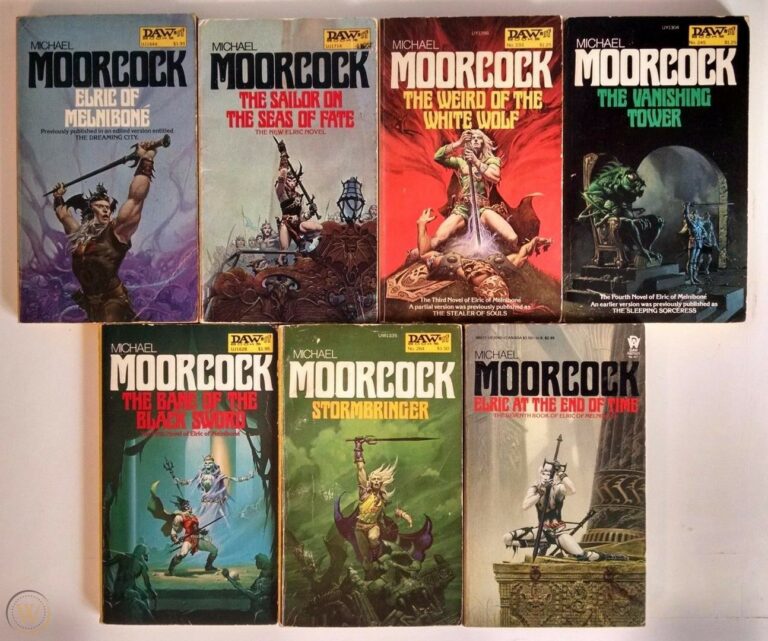
Rob: This fantastic painting we chose for the cover, “Elric in Exile”, perfectly reflects the dark and brooding mood of this album. Yes, it was painted by Michael Whelan, whose art graces our 4 other studio albums, our single, “Witch’s Game”, and our live album, “I’m Alive”. He is a world-renowned artist, whose masterpieces have been featured on albums by bands such as; Sepultura and Smoulder, and authors; Ray Bradbury, Michael Moorcock, Isaac Asimov, Stephen King, and Arthur C Clarke.
Ever since we forged a relationship with Michael Whelan with our first album, “Frost & Fire”, our dream was to use his series of Elrić of Melnibone covers from the 1980’s DAW Book editions, for all our future covers. Of course, back then we were a young band and had no idea what the future held for us, or how many albums we would ever produce. Once again, we are honored and privileged, to have this renowned artist’s work again gracing our latest album, and hope to continue to work with him on any future projects! He has been one of the bands best and most stedfast friends throughout the years, even coming out to see the band play in Brooklyn, New York at the “Defenders of the Old” festival!
While I was thinking of what to say in my review, I wrote down that I enjoyed the short length of the record very much. Nine songs are quite enough in my opinion. Close to perfection. Unfortunately, too many bands (or maybe their labels) make records that are way too long. As a result, you’ll find too many fillers inside…
Rob: We actually were constrained as the dominant format once again is the 12” LP, and you can only fit so much music on an album, without deterioration of the sound quality! Plus, in keeping with our history we wanted to release the album that would have come right after “Paradise Lost”! You see, we had unfinished business!
Let’s talk about Jarvis Leatherby. How important was him for your comeback?
Rob: Jarvis Leatherby, our current bass player and manager, played a pivotal role in the reformation of the band. I had a friend Carl Valdez, who was the original drummer in a famous local punk band “Ill Repute”. He was friends with Jarvis, and told me that Jarvis wanted to meet, to discuss “Cirith Ungol”. We met, and I was amazed at his stories of touring with “Night Demon”. They had met many who still were interested in “Cirith Ungol”, especially on the continent, and he suggested resurrecting the band. Jarvis was putting on a metal festival in our hometown of Ventura, California, the “Frost & Fire Festival I”, and had booked bands from all over the world. He asked if we would do a signing session, and all the original members (except Jerry Fogle who has tragically passed away in 1998) attended. The festival was a huge success, and at the signing session, many showed up with albums and memorabilia to be signed. It seemed a new generation of metal aficionados had discovered the music, we had toiled so hard on, for so many years.
Jarvis had invited Oliver Weinsheimer from the “Keep it True Festival”, and after the signing session he wanted to talk to the members alone, so we along with Jarvis, retreated across the street to a local bar. Oliver had been in contact me since 2004, about getting the band back together, and I had told him that I appreciated his offer, but it was never going to happen. So now we found ourselves; Jarvis, Oliver, Greg, Tim, Flint, Jimmy and myself all sitting around at a table wondering what was to come next. Jarvis having just hosted an amazing festival said he planned on putting on another one, “Frost & Fire II” next year, and asked us if we would reform and were interested, we could headline his show. Oliver also talked about how successful his festival was in Germany, and asked us if we reformed, we could headline his 20th anniversary show in 2017!
This was quite a bit to take in, as we had all spent the last many years pursuing other lives an getting the band back together seemed like a long shot. We were hesitant at first, but deep in our soul the fire of true metal burned, and we all decided to unleash the being called Ungol back onto the unsuspecting world!
Why didn’t Michael “Flint” Vujea rejoin the band?
Rob: The original plan was for Flint to join, and he was of course at the “Frost & Fire II” concert, and meeting. However, it soon became obvious that the logistics of him living so far away, were insurmountable. It was a big disappointment for all, but we needed to be able to communicate and play in real time. We are still friends and talk to him often.
Why did you choose to play with 2 guitars?
Rob: Right before the release of “Frost & Fire” in 1981, Flint started playing with the band. Although he appeared on the album cover, Greg played bass on that album. Once Flint joined, we played for a time with Greg & Jerry as dual lead guitarists. This allowed us to play more complicated compositions live, such as dual harmonies, etc. After “One Foot in Hell” we brought on Jim Barraza to play alongside our then current guitarist Jerry Fogle, to do the same. Unfortunately, Jerry left the band shorty after, and we were back with one guitar. Although the band existed for years with a single guitar, it is not unprecedented in the bands history to have two leads.
It’s now been more than 20 years since Jerry Fogle passed, what are your memories of working with him?
Rob: He was an amazing guitarist and had a unique talent of making his guitar sing. He was a quiet man and a gentle soul, with enourmous natural ability and a passion for heavy music.
Jimmy is quite an accomplished musician also, and he has respected Jerry’s talent and past work. A fan had acquired Jerry’s skeleton necklace, which we all had made for the band, and he gave it to Jimmy. He now wears it live on stage, and it seems as if he is channeling Jerry’s spirit. It is almost surreal.
What about Witch’s Game? Why did you leave it outside the record?
Rob: Witch’s Game” came about when Tim found mention of movie “The Planet of Doom” on the Internet. Jarvis contacted the producers as we had a song, “Doomed Planet”, on our “One Foot in Hell” album. “The Planet of Doom” movie is one continuous tale broken up into 15 chapters, each interpreted by a different artist and musical band. The artists in our chapter are Andrei Bouzikov, and Joel Abad. It is an animated feature length film in which the hero, Halvar the brave, seeks vengeance aboard a witch-born chopper, journeying across a psychedelic landscape on a quest to defeat the deadly beast Mördvél for the slaying of his beloved bride. The art director and producer David Paul Seymour, and the animator and director Tim Granda, were long time fans of the band, and wanted to use “Doomed Planet”, during the closing credits of the movie. Fortunately for us one of the other bands in the movie had to drop out, so we were offered the opportunity to write an original composition for the movie. This song, “Witch’s Game”, was composed specifically for a chapter in the movie where the hero “Halvar” enters a cave and encounters a witch, who reads his tarot cards. During that reading he journeys into the cards, with some pretty trippy experiences! We are all very excited to work on this project, as we had never been involved in a motion picture soundtrack before, and we are eagerly awaiting the movie’s release, some time in 2021. You can follow its progress online.
The album “Forever Black” is entirely new material, and we wanted it to be a proper successor to our line of studio albums. That is exactly why we did not include “Witch’s Game” or “Brutish Manchild”. We wanted it to be a monument to stand proudly on its own!
Now I really would love to spend some questions about the first part of your career. You started as Titanic, before switching to Cirith Ungol. It marked also Tim Baker’s entry who previously was your roadie, correct?
Rob: Well back then we all were roadies! I think Tim was more a sound man mixing the band at shows! But as soon as we heard him sing, it was obvious that our fortunes were tied together with his demonic wailings!
Then you started Liquid Flame Records and published your debut Frost and Fire. Someone said it was a response to the NWOBHM. But in my opinion, it was mainly a response to bands like Grand Funk Railroad, Mountain or Sir Lord Baltimore… But a little heavier.
Rob: I think you are correct. Many people consider us part of the NWOBHM, which erupted in the late 1970’s. Even though we enjoyed many of those bands, and our first album was released in 1981, we were, and always have been, more influenced by, and considered us part of, the original wave of metal.
After years of trying to get the attention of the record industry in Los Angeles, we decided to pull out all the stops and create the mother of all demos which turned out to be “Frost & Fire”. It had to be an offering as polished as any released by major labels. In order to get radio airplay which was essential at the time, we put on that album what we considered were our most commercially accessible songs. It was recorded at Goldmine Studios in Ventura, California, and soon after we moved lock stock and barrel into a band room lair close by, where we would reside until 1991.
Along with Manilla Road you are pointed as the Epic Metal inventors, but your style is way different from that of Heavy Load, Warlord, Manowar, Virgin Steel. Yours is more obscure and rough. Do you agree?
Rob: It is hard to believe, but at the time we had never heard, or had knowledge of those bands with the exception of Manowar. We only discovered them years later. Even though we are grouped with many of those bands rightly so, our unique style of metal is definitely all its own, based on our vision of the heaviest metal known to man!
Also through the years Manilla Road explored thrash territories (The Deluge, Mystification and of course Out Of The Abyss), while you choose a more Sabbathish/doomish way.
Rob: I think by the time we released “Frost & Fire” and certainly after “King of the Dead”, we saw the bands path to lie in a darker direction, and we decided to play the heaviest metal we could produce, it is goal, it is our vision, it is the path laid out before us! Many reviewers compare our music to Black Sabbath. I don’t see that at all but it is an honor to be compared with one of my favorite bands of all time! I saw them live at the Hollywood Bowl with Captain Beyond and Gentle Giant. I was physically moved by their ability to use their heaviness to whip the crowd into a pulsating frenzy. That has been our goal all along, but they were the masters!
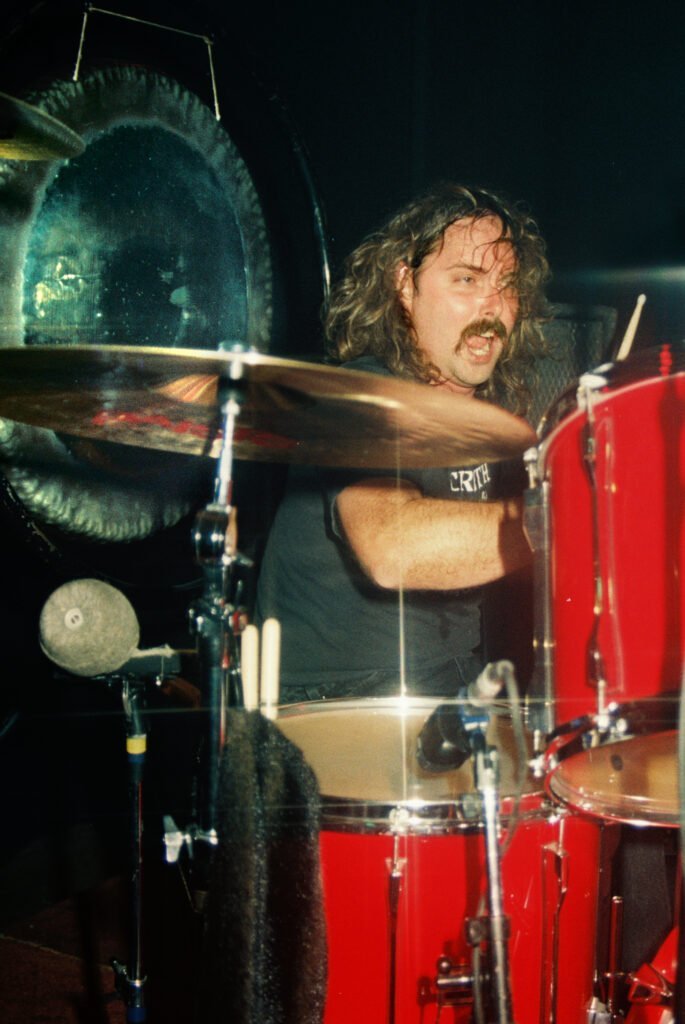
Photography By Greg Hazard
Three years later you signed with Enigma, but someone wrote that you had to fund yourselves the King of the Dead album. Anyway, in my opinion that is your best record so far. Master of the Pit, King of the Dead, Finger of Scorn and Cirith Ungol… That’s perfection!
Rob: My parents loaned me the money for the recording, which I paid back, and the band had complete control over every aspect of the album. It is definitely an amazing accomplishment, which we are proud of! I think compared to many of the more successful albums at the time, “King of the Dead” was much heavier!
It’s not a mystery why Metal Blade Records decided to sign you with… Then came One Foot In Hell, maybe your most mature and dark record.
Rob: That was a killer album with some of my favorite songs, “Blood & Iron” and “Chaos Descends”! It was dark and had some doomy material, such as “Doomed Planet”! Not sure why we did not stay with Metal Blade Records, but that was probably one of the bands biggest mistakes, at the time, and we are proud to be back where we belong.
Why did it take so long for your fourth record? Five years, right? What happened in the meantime? And why did the band split, then?
Rob: The simple reason for the extended time between all of our albums, was situations beyond our control, however none had anything to do with the band’s musical output. Right after each album was released, we always had the next album written, and demos ready. What held us up in many instances was other factors such as, raising money for the next project (“King of the Dead”), trying to get a new record company (“One Foot in Hell”) and get a new record company, then waiting for them to approve the recording time (“Paradise Lost”).
Talking about the lyrics (and of course your cover) what made you choose Elric as main theme? But also Milton, Tolkien, Howard (and sword & sorcery literature in general)…
Rob: Greg and I met as we were in a literature class where we were assigned to read J. R. R. Tolkien’s “Lord of the Rings”. We were young about 13, and it definitely had an influence on us at the time, and also propelled us on a journey of discovery of “Sword and Sorcery” literature. When we were working on “Frost & Fire”, and were looking for cover art, Greg had loaned me his copy of “Stormbringer” to read, and it seemed like the best album cover of all time. I contacted the publisher who put me in touch with Michael Whelan, and the rest is history!
What do you think about Covid-19? What’s happening in the States?
Rob: It is a horrible nightmare and I am not sure where this is all headed but it is ironic that much of our lyrics have focused on themes of mankind’s fall. We have good friends in northern Italy, and I know many have suffered there as well. We just hope we all make it out alive, and come out stronger at the other end…..
When do you think bands could start again to play concerts? Any plans to play here in Europe, maybe in Italy?
Rob: I am going to leave that up to the scientists and medical professionals, but we had many shows booked all over the world, many in Europe, and they all have been cancelled or rescheduled.
It is my personal dream to visit and play in Italy. I was born on the same day Dino Ferrari died in 1956 and my whole life has been a passion for everything Ferrari. About the same time the band was getting together, I wrote Enzo Ferrari and he wrote me back, sending me an autographed photo. My dream was if the band made it big, was to have a collection of classic Ferrari. I have been lucky enough to have two classic Dino Ferrari, which I work on myself, so my quest has not been a complete failure, although still waiting for that GTO! So, to me, visiting Italy would be like a spiritual homecoming of sorts.
Thank you very much!
Rob: Thank you for your thoughtful questions. I hope that someday soon I will be standing in Italy and shaking your hand getting ready to take the stage to share our unique brand of metal with my Italian brothers and sisters. Until then, keep the faith, and keep it heavy!!!
Cirith Ungol interview (Robert Garven) Di Orso Comellini